
BEYOND
by All World Travel
Edited by Clara West
A house name · a rotating collective of travel writers
October 2026 Issue
The Turning Season
What summer taught us, the long autumn, and the festive wait
In This Issue · 9 Stories
“I don't want to tell you everything about a place. I want to tell you what you'll remember about it.”
Clara West, Editor · Editorial Philosophy
From the Road
Why this month, why these places
There is a week in late September when the light changes. Not the angle of it, that's been shifting since June, but the weight of it. The gold goes deeper. The air carries a memory of heat without the heat itself. I always know the season has turned when I stop reaching for my sunglasses and start reaching for a light sweater. This issue is about that turn. We look back at what summer taught us, not the itineraries, but the things you only learn by being somewhere hot and still long enough to notice. We settle into the long autumn, the shoulder season I think is the best-kept secret in travel: the crowds gone, the water still warm, the prices still soft. And we lean toward the festive, the markets, the opera houses, the first snow on the rooftops, because by October, if you're a traveler, you're already thinking about December. I didn't want to tell you everything about these places. I wanted to tell you what you'll remember about them.
Clara West, Editor · A Collective of Travel Writers
Contents
In This Issue
- 01
Places to Stay · Europe & The Mediterranean
Grand Hotel Tremezzo
- 02
Tables · Venice, Italy
Cipriani at Belmond
- 03
Places to Stay · Europe & The Mediterranean
Les Sources de Caudalie
- 04
Places to Stay · Tuscany, Italy
Borgo Santo Pietro (Relais & Châteaux, near Siena)
- 05
Places to Stay · Porto, Portugal
The Yeatman Hotel (Gaia — best view of Porto)
- 06
Places to Stay · Marrakech, Morocco
Royal Mansour Marrakech (the pinnacle)
- 07
Places to Stay · Vienna, Austria
Hotel Sacher (Virtuoso — historic, Sachertorte)
- 08
Places to Stay · Switzerland
Baur au Lac, Zurich
- 09
Places to Stay · Munich, Germany
Bayerischer Hof (Virtuoso — historic luxury)
The Lead Feature
Places to Stay · Europe & The Mediterranean
Grand Hotel Tremezzo
I remember the floating pool. Not the spa, not the gardens, not the Belle Époque ballrooms, though they are all there, and they are all worth the trip. But the floating pool. It sits in the lake, tethered like a boat, and you swim in Lake Como water with the Bellagio hills rising in front of you and the Grigne mountains behind, and for a moment you forget you are at a hotel at all. You are just in the lake. The Tremezzo has been run by the same family since 1910, and it has the thing that family-run hotels always have and corporate hotels spend millions trying to manufacture: it feels like a house. The kind of house where someone has thought about where the light falls at five o'clock, and where the rose garden should be, and whether you'd like a glass of Franciacorta before dinner. I sat on the terrace one evening and watched a wedding party spill out onto the lawn, and the grandmother of the bride was crying, and the staff were pretending not to notice, and I thought: this is what a hotel is for. Not just to sleep in, but to hold the moments that matter. That's what summer taught me at Lake Como. Not the luxury. The time. The permission to sit still long enough to watch the light move across a mountain.
Perched on the sun-drenched shores of Lake Como, the historic Grand Hotel Tremezzo is an Art Nouveau masterpiece offering unparalleled views of Bellagio and the Grigne Mountains. This family-run icon blends Belle Époque elegance with modern luxury, featuring a world-class T Spa, a unique floating pool on the lake, and lush botanical gardens. It is the quintessential Italian escape, where timeless glamour meets warm, personalized service in one of Europe’s most breathtaking settings.
The Clara Edit
I keep coming back to Lake Como in September, when the heat breaks and the lake goes glassy and still. Here's what I'd do, and what I'd come back for.
The Tremezzo. Ask for a lake-view room in the main building, not the annexe. The floating pool is the reason: swim in the lake without leaving the hotel.
The risotto with lake fish at the Terrazza restaurant, and a glass of Franciacorta. The menu changes with the lake.
The gardens at 5pm, when the light hits the roses and the Bellagio hills go gold. Ten minutes. It's the whole trip.
Take the hotel's wooden boat to Bellagio at sunset. Twenty minutes across the lake, and you'll remember it longer than anything in the spa.
I'd skip the spa if you're only there two nights. It's excellent, but the lake is better, and the lake is free. Save the spa for a rainy afternoon.
The floating pool at 7am, before anyone else is up. The water is cold, the mountain is in the mist, and you have the whole lake to yourself.
“I didn't want to tell you everything about these places. I wanted to tell you what you'll remember about them.”
From the Editor
Field Notes
What's moving this month
THE SHOULDER IS THE SHOW
October is the month. The Mediterranean is still 24 degrees, the hotels are 30% cheaper, and the crowds have gone home. If you only learn one thing from this issue, learn that: the best time to go south is after everyone else has left.
THE FESTIVE WINDOW
The good festive hotels (Sacher, Baur au Lac, Bayerischer Hof) are booking now. Not next month. Now. The Virtuoso rooms with the Christmas-market views go first, and they go by mid-October. If you want Vienna in December, this is the week to call your advisor.
THE HARVEST IS HAPPENING
Tuscany, Porto, Bordeaux: the harvest is right now. The vineyards are working, the rabelo boats are on the Douro, the olive oil is being pressed. You can taste the year in the glass. This is the time to be in wine country, not July, not August. Now.
THE MOROCCO WINDOW
Marrakech in October is 25 degrees and clear. By November it's 20 and rainy. The Royal Mansour's riads book out for the shoulder months early, because the people who know, know. If you want the medina without the heat, this is your six-week window.
The Collection
More from this issue
Movement I
What Summer Taught Us
The things you only learn by being somewhere hot and still long enough to notice.
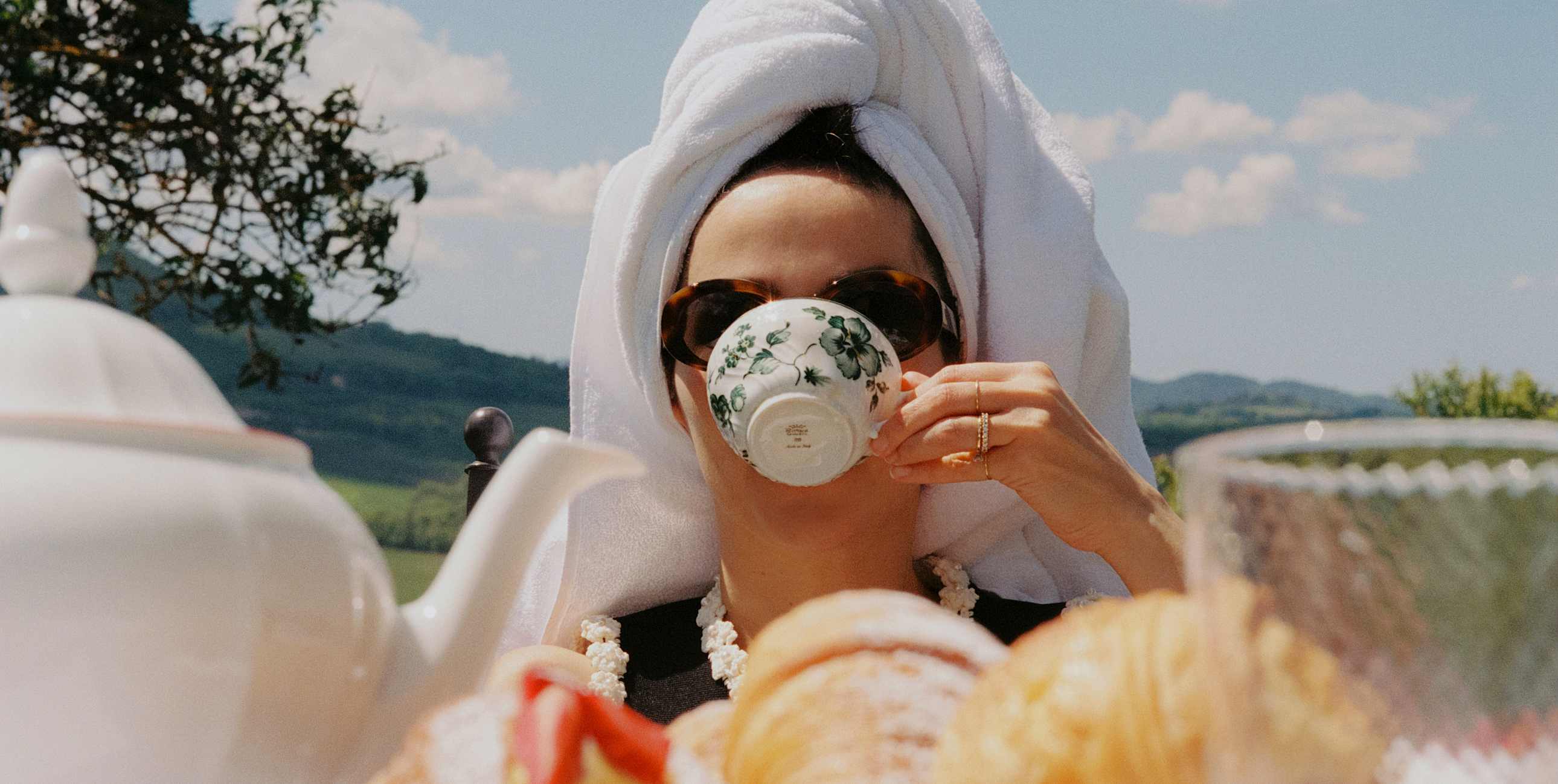
Tables · Venice, Italy
Cipriani at Belmond
I went for the view. I stayed for the tortellini. The restaurant at Cipriani looks out across the lagoon to the Giudecca, and at sunset the water turns the color of a peach that's been left on the counter all afternoon. The food is Venetian in the way Venetian food used to be: simple, exact, unafraid of a fish. I ate the risotto al nero di seppia and watched a gondola go by and felt the particular smugness of being on the water in a city that doesn't need cars.
Best hotel restaurant view in Venice
Places to Stay · Europe & The Mediterranean
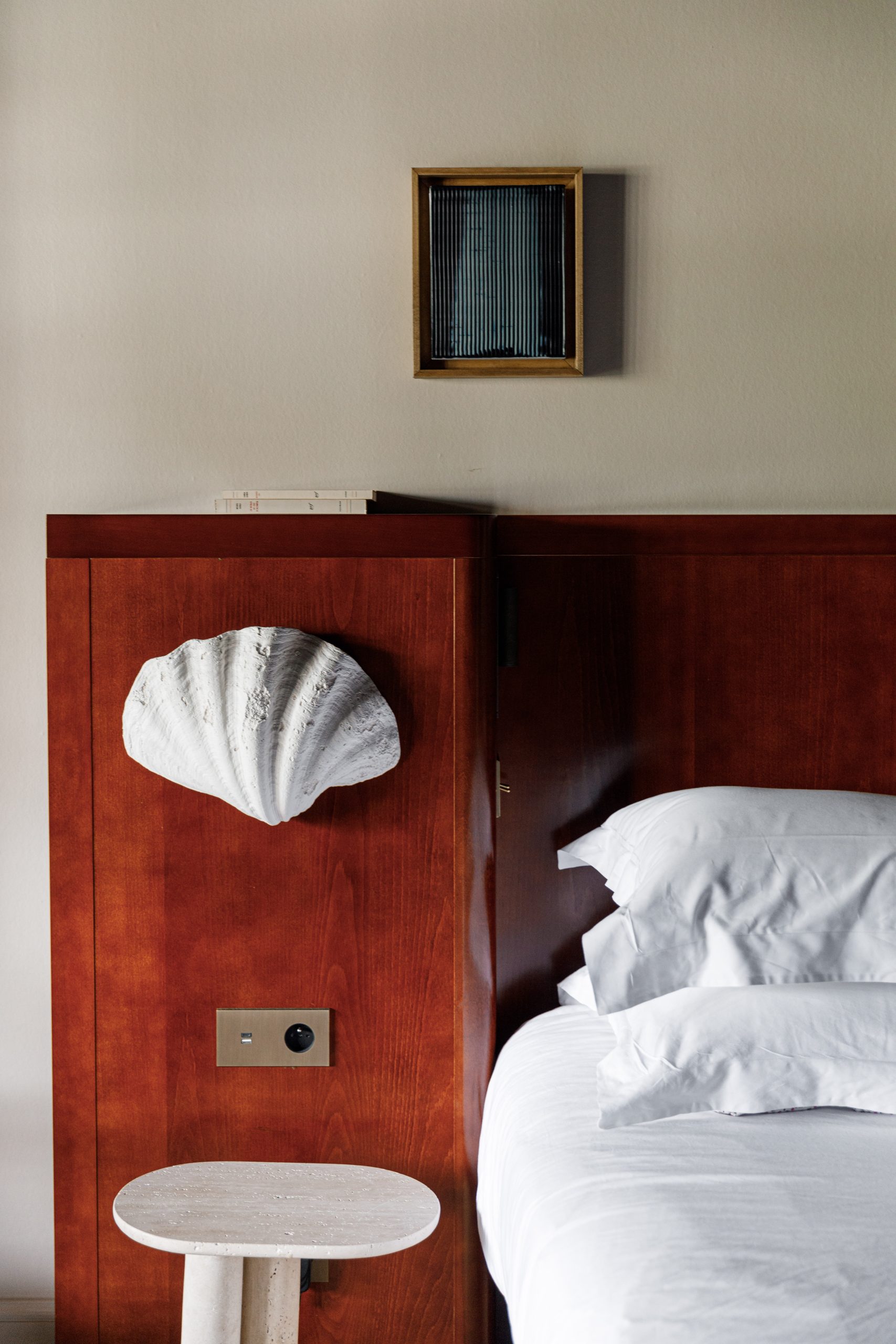
Les Sources de Caudalie
The vineyards come right up to the door. Not a decorative row, the actual working vines of Château Smith Haut Lafitte, the ones that make the wine you drink at dinner. I had a massage with crushed grape seeds and then I drank the grape and I thought: the French have figured something out here that the rest of us are still catching up to. It's the only Palace-rated hotel in Bordeaux, and it doesn't feel like a palace. It feels like a very nice house in a vineyard, which is better.
Nestled within the prestigious Château Smith Haut Lafitte vineyards, Les Sources de Caudalie is a sanctuary of serenity and refinement. As the only Palace-rated hotel in Bordeaux, it offers an immersive experience where nature, world-class gastronomy, and the pioneering Vinothérapie Spa converge. With 62 individually decorated rooms and suites, this estate captures the warmth of a family home while delivering the impeccable service and sophisticated comfort expected of a premier French destination.
Movement II
The Long Autumn
The shoulder season: crowds gone, water warm, prices soft. The best-kept secret in travel.
Places to Stay · Tuscany, Italy
Borgo Santo Pietro (Relais & Châteaux, near Siena)
I ate a tomato that changed my mind about tomatoes. It came from the 300-acre organic farm that surrounds the estate, and it was still warm from the sun, and the chef had done almost nothing to it. This is what autumn in Tuscany is: the harvest, the oil, the truffles starting, the light going amber over the cypresses. Borgo Santo Pietro is a 13th-century estate that was a pilgrim's rest, and it still feels like a rest, a place you go to stop moving.
Borgo Santo Pietro is an enchanting 13th-century estate nestled in the heart of the Tuscan countryside. This five-star sanctuary offers a seamless blend of historic charm and modern luxury, featuring 22 individually designed rooms, a holistic spa, and a 300-acre working organic farm. Guests can immerse themselves in the 'farm-to-plate' philosophy, explore 13 acres of manicured gardens, and enjoy world-class dining, all while surrounded by the breathtaking, cypress-lined hills of Italy.
Places to Stay · Porto, Portugal
The Yeatman Hotel (Gaia — best view of Porto)
The view is the reason. Every room looks across the Douro to the UNESCO skyline of Porto, and at night the city is a string of lights along the river. I had a port tasting on the terrace and then a two-star dinner and then I slept in a bed that felt like it was floating above the city. Autumn is when the Douro valley harvests, and the river is full of the rabelo boats carrying the grapes. You're watching a 300-year-old industry happen in real time.
Perched on a hillside in Vila Nova de Gaia, The Yeatman is Porto’s premier luxury wine hotel. Every spacious room and suite features a private terrace with breathtaking, panoramic views of the UNESCO-listed Porto skyline and the Douro River. With a two-Michelin-starred restaurant, a world-class Caudalie Vinothérapie Spa, and stunning infinity pools, this Relais & Châteaux property offers an unparalleled, sophisticated retreat in the heart of Portugal’s historic wine country.
Places to Stay · Marrakech, Morocco
Royal Mansour Marrakech (the pinnacle)
You don't stay in a room. You stay in a riad, a multi-story private house with its own courtyard, its own plunge pool, its own staff. The King of Morocco commissioned it, and it's a medina within a medina, five hectares of green and tile and water. I went in October, when the 45-degree summer has broken and the city is 25 and clear, and I sat in my courtyard and listened to the call to prayer echo across the rooftops. That's the autumn Marrakech: not the heat, not the crowds. The clarity.
Commissioned by the King of Morocco, Royal Mansour Marrakech is an architectural masterpiece that redefines luxury. Instead of traditional hotel rooms, guests reside in one of 53 private, multi-story riads, each a sanctuary of intricate Moroccan craftsmanship. Set within a lush, five-hectare estate, this 'medina within a medina' offers an unparalleled level of privacy, world-class dining, and a legendary 2,500-square-meter spa, all just steps from the vibrant energy of Jemaa El Fna square.
The Clara Edit
Marrakech in October is the city at its best: 25 degrees, clear, the medina alive without the summer furnace. Here's how I'd do it.
A riad, not a room. The Royal Mansour's private multi-story riads each have a courtyard, a plunge pool, and your own butler. It's a medina within the medina.
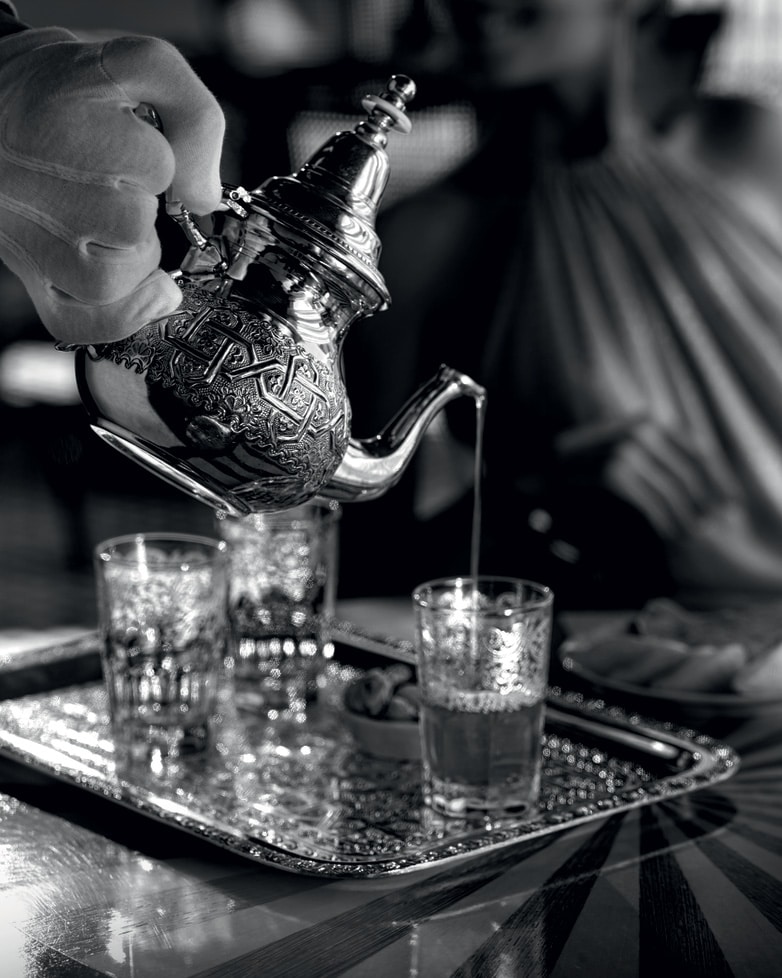
The Moroccan breakfast on your terrace: msemen, honey, fresh orange juice, mint tea poured from a height. It's the best meal of the day and it costs nothing extra.
The 2,500-square-meter spa. It's the best spa in Morocco, and I don't say that lightly. Book the hammam ritual, not just a massage.
Jemaa El Fna at dusk, when the food stalls open and the storytellers start. It's a five-minute walk and it's the most alive square in the world.
I'd skip the souks in the middle of the day in October. Go at 9am or after 4pm. The midday heat is still enough to make you cranky, and the touts can sense cranky.
The rooftop at night, with the Atlas Mountains on the horizon and the call to prayer echoing across the city. It's the Marrakech you came for.
Ask Your Advisor About
Ask your advisor about the Royal Mansour's private riad availability. The best ones, with the rooftop views, book out months ahead, and your advisor can often secure the ones that aren't listed online.
Clara inspires the trip — your advisor makes it yoursMovement III
Festive
The markets, the opera houses, the first snow. By October, if you are a traveler, you are already thinking about December.
Places to Stay · Vienna, Austria
Hotel Sacher (Virtuoso — historic, Sachertorte)
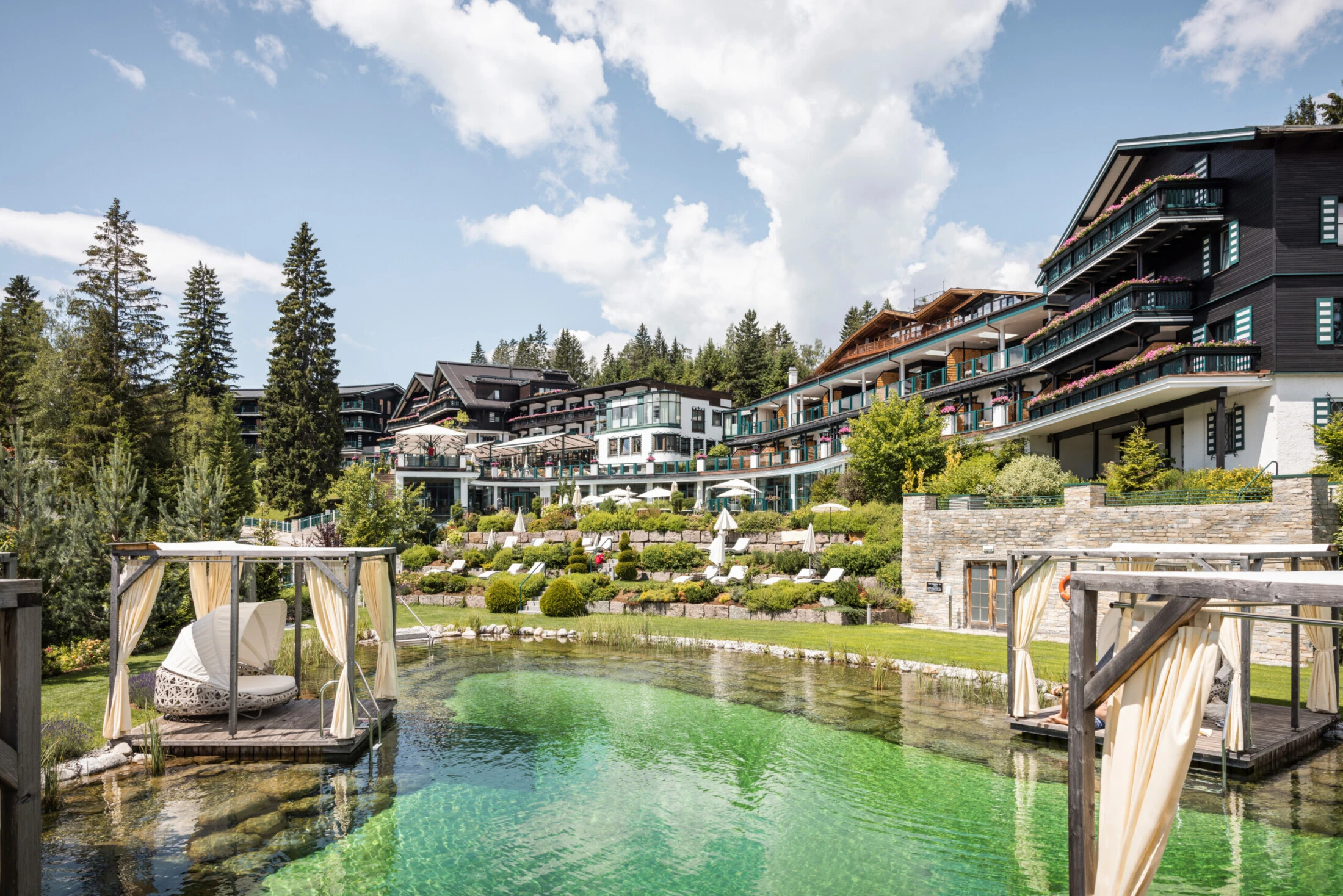
I came for the Sachertorte. I stayed for the opera. The Sacher sits opposite the State Opera, and in December the city is all lights and markets and cold air that smells of glühwein and roasted chestnuts. I had torte and coffee in the café, the original, with the red wax seal, and then I walked across the street and saw the Rosenkavalier and cried at the end, which I blame on the torte and the music and the time of year. This is what festive Vienna does to you.
Experience the pinnacle of Viennese tradition at Hotel Sacher, a legendary 5-star landmark located directly opposite the State Opera. Since 1876, this family-owned hotel has defined luxury, blending fin-de-siècle grandeur with modern sophistication. Indulge in the world-famous Original Sacher-Torte, relax in opulent rooms adorned with fine art and marble, and enjoy an unrivaled location steps from the Hofburg and Albertina. It is the quintessential home for those seeking the heart and soul of historic Vienna.
The Clara Edit
Vienna in December is the city at its most itself: opera, torte, lights, cold. Here's the Sacher way to do it.
The Sacher, opposite the State Opera. Ask for a room facing the Oper, not the street. In December the opera-goers in furs on the steps are the show.
The Original Sachertorte in the café, with a melange coffee. Yes, it's touristy. It's also the best cake in Vienna and you should not skip it.
The Vienna Boys' Chapel at the Hofburg on a Sunday morning. It's free, it's 500 years old, and it will make you understand why Vienna is Vienna.
The Christkindlmarkt at the Rathausplatz for glühwein and a bratwurst, then the smaller one at Spittelberg for the handmade ornaments. Two markets, one evening.
I'd skip the big New Year's Eve gala if you're not a waltz person. It's €450 a head and crowded. Go to the Silvesterpfad in the city center instead; it's free and more fun.
Standing on the Graben at dusk, with the lights strung between the buildings and the cold air and the Pestsäule lit up, and thinking: this is what festive means.
Ask Your Advisor About
Ask your advisor about opera tickets at the State Opera. The Sacher's concierge can get them, but your advisor can often secure better seats at better prices through Virtuoso channels.
Clara inspires the trip — your advisor makes it yours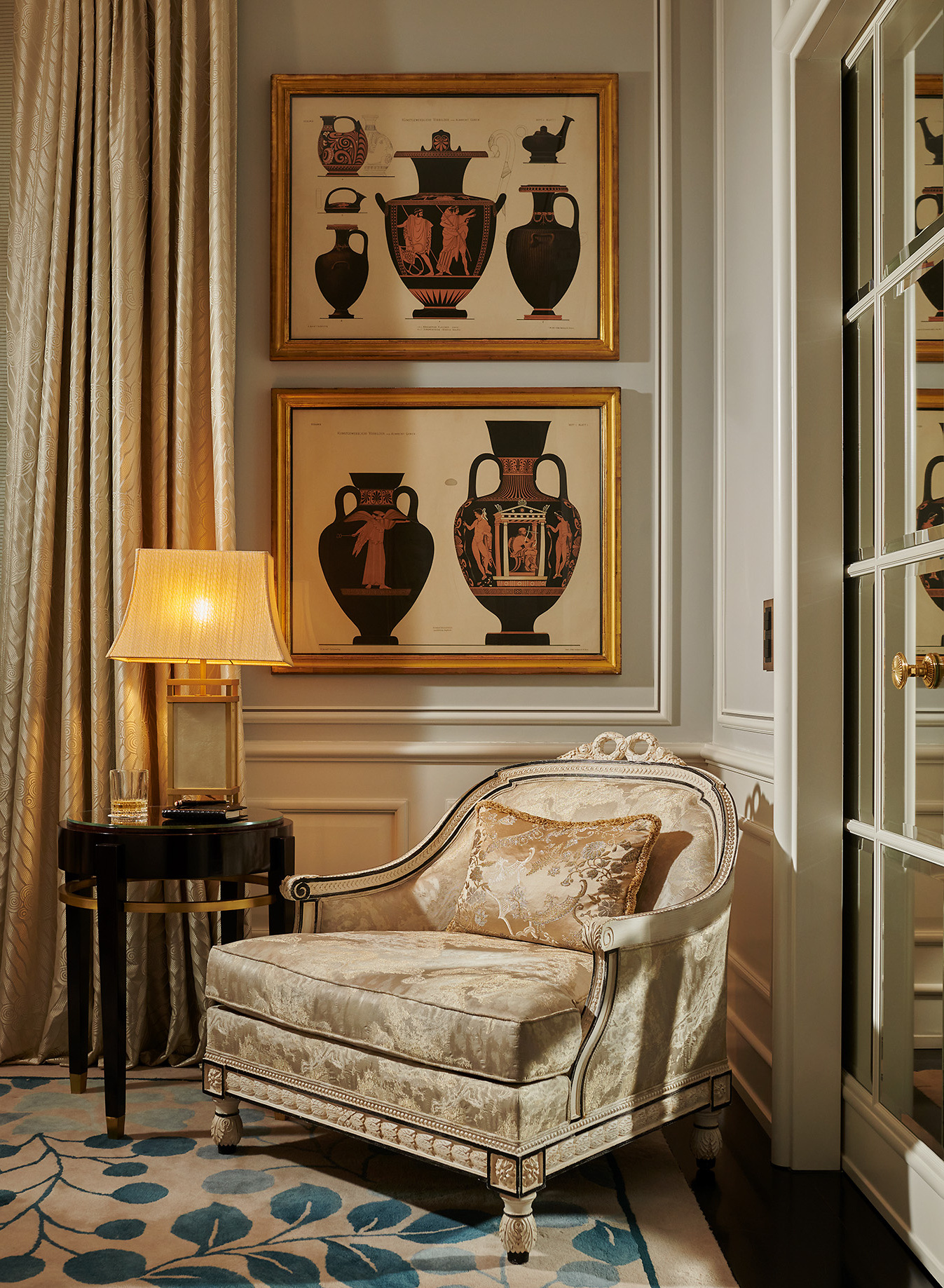
Places to Stay · Switzerland
Baur au Lac, Zurich
It's in its own private park on the lake, and when the first snow comes, the park goes white and the lake stays dark and the Alps are right there, across the water. The Baur au Lac has been family-run since 1844, and it has the kind of Christmas where the tree is real and the fire is real and the staff remember your name. I took a walk through the park at dusk and the lights were on in the trees and I thought: this is why people come to Switzerland in December. Not to ski. To be in a warm room near a cold lake.
Since 1844, the family-run Baur au Lac has defined Zurich luxury. Nestled within its own private park on the shores of Lake Zurich, this legendary hotel offers a serene, sophisticated retreat just steps from the exclusive Bahnhofstrasse. With individually designed rooms, impeccable service, and breathtaking views of the Alps and the lake, it remains the premier address for travelers seeking timeless elegance and discreet, world-class hospitality in the heart of Switzerland.

Places to Stay · Munich, Germany
Bayerischer Hof (Virtuoso — historic luxury)
The Christmas markets in Munich are the best in Germany, and I'll fight anyone who says otherwise. The Bayerischer Hof is in the Old Town, and you can walk to the Christkindlmarkt in three minutes. I came back from the market with a bag of lebkuchen and a wooden nativity scene and sat in the rooftop spa and looked out over the snow-covered rooftops and thought: the Germans understand winter. They don't fight it. They light it.
Experience the legendary grandeur of Bayerischer Hof, a historic, family-run sanctuary in the heart of Munich’s Old Town. Originally commissioned by King Ludwig I, this iconic hotel blends timeless elegance with modern luxury. With 337 individually designed rooms, a world-class two-Michelin-starred restaurant, and the stunning rooftop Blue Spa, it offers an unparalleled urban retreat. Whether you are here for the culture, the nightlife, or the exquisite service, Bayerischer Hof remains the definitive address for a sophisticated Munich stay.
A Closing Word
Until the next issue
There is a moment, every year, when I stop fighting the end of summer and start looking forward to the next thing. This issue is that moment. The summer we had, the autumn we're in, the festive we're moving toward: it's all one trip, really, if you plan it right. The light changes, the clothes change, the wine changes. The only thing that doesn't change is the reason we go: to be somewhere that holds the moments that matter. Until the next issue, Clara West, Editor
Clara West, Editor · A Collective of Travel Writers
Clara's Latest
From the road, this week
The ongoing dispatches between the monthly issues — what Clara noticed, tasted, and tried.

Inkaterra Machu Picchu Pueblo Hotel
The Clara Edit
A village of whitewashed casitas that feels less like a hotel and more like a slow, breathing extension of the cloud forest itself.
Take the train from Cusco or Ollantaytambo to the Aguas Calientes station, where hotel staff will meet you for the short walk to the property. The humidity is constant, so pack light layers and sturdy boots for the stone paths that wind through the gardens.
Request a casita with a fireplace; the damp chill of the cloud forest settles into the stone walls by evening, and the crackle of eucalyptus wood is the only sound you'll want to hear.
The organic tea, harvested right here on the property, served during the afternoon ritual while the mist begins to swallow the tops of the trees.
A morning walk through the orchid trail to spot the Andean cock-of-the-rock, whose brilliant red plumage is a shock of color against the deep, dripping greens of the forest.
The Spectacled Bear rescue center located on the grounds, where you can see these shy, solitary creatures moving through their natural habitat.
The crowded main street of Aguas Calientes; it is a frantic, noisy contrast to the stillness of the hotel, and you won't find anything there that you can't find better inside the property gates.
The way the heavy, wet scent of moss and damp earth clings to your sweater long after you have left the valley floor.

COMO The Treasury, Perth
The Clara Edit
In the heart of Cathedral Square, the 19th-century State Buildings have been hollowed out and reimagined into a sanctuary that feels less like a hotel and more like a private, hushed archive of Western Australian history.
Perth Airport is a 20-minute taxi or rideshare drive from Cathedral Square, and the city’s free CAT bus network stops just steps from the hotel’s front entrance.
Request a room with a view of the Cathedral; the high ceilings and thick heritage walls keep the city’s hum at a distance, leaving only the soft, deliberate geometry of Kerry Hill’s design.
At Wildflower, order the degustation menu that follows the Indigenous six seasons, specifically the marron if it’s on the plate, paired with a glass of Margaret River chardonnay.
Spend an hour in the indoor pool, where the light filters through the heritage architecture in a way that makes the water feel like a cool, private basin hidden from the rest of the world.
Walk five minutes to the edge of the Swan River at Elizabeth Quay; the contrast between the stillness of the hotel’s stone corridors and the open, wind-swept expanse of the water is the best way to orient yourself in Perth.
I’d skip the rush of the lobby during the morning coffee peak; the Postal Hall is beautiful, but it’s better enjoyed in the mid-afternoon when the acoustics settle and you can actually hear the history in the floorboards.
The way the late afternoon sun hits the original copper roof detailing, casting long, sharp shadows across the white stone of the interior stairwell.

Hôtel du Louvre, Paris
The Clara Edit
Stepping off the Eurostar at Gare du Nord, I wanted the city to begin immediately, not after a tedious cross-town transit.
The hotel is a ten-minute taxi ride or a short Metro trip from Gare du Nord, where the Eurostar terminates. If arriving by air, expect a 45-to-60-minute transfer from Charles de Gaulle depending on traffic.
Request a room facing the Place André Malraux; at 8:00 AM, the heavy sound of the Comédie-Française doors swinging open is the only alarm clock you need.
The signature cocktail at L'Officine du Louvre, specifically anything featuring the house-made botanical infusions, sipped while the zinc bar top is still cool to the touch.
Walking the two minutes to the Palais Royal garden at dawn, before the tourists arrive, to watch the neighborhood dogs claim the gravel paths.
Cross the street to the Louvre’s Richelieu wing entrance, but bypass the galleries entirely to spend your hour in the quiet, glass-roofed courtyards where the sculptures sit in the shadow of the palace walls.
The hotel restaurant for dinner; the immediate vicinity is teeming with brasseries that have been sharpening their knives since before this building was renovated.
The way the streetlamp light reflects off the cream-colored stone facade and catches the gold leaf of the Comédie-Française sign, just as the last taxi clears the square.
Las Vegas Strip Night Helicopter Flight
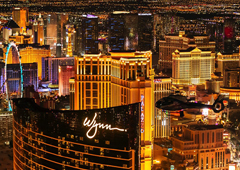
It is 9:00 PM on a Tuesday, and the desert air is cooling just enough to make the tarmac feel manageable. You are strapped into the leather seat of an Airbus helicopter, the rotors thrumming a steady, rhythmic vibration against your chest. As you lift, the city doesn't just light up; it explodes. The Strip becomes a circuit board of neon, a frantic, glowing spine cutting through the dark. You hover over the Luxor’s beam, a sharp, violet-white finger pointing into the void, and watch the Bellagio fountains dance like liquid silver from a perspective that makes the crowds below look like scattered glitter. The flight is short—barely twelve minutes—but it is long enough to see the Sphere’s digital skin pulse with color. It is a frantic, high-octane way to digest the scale of this place. You will feel the hum of the city in your teeth long after you land.

The Royal Yacht Britannia
It is 10:00 AM in Leith, and the morning light is bouncing off the grey water of the Firth of Forth. Stepping onto the Britannia, I expected the usual velvet-rope distance of a museum. Instead, I found the quiet, lived-in hum of a ship that feels like it just finished a voyage. The contrast is what sticks: the polished mahogany and white-gloved formality of the State Apartments against the cramped, utilitarian bunks of the Royal Yachtsmen below deck. I spent an hour tracing the galley’s stainless steel surfaces and the surprisingly modest family bedrooms. It is not a place of excess, but of precise, disciplined order. The audio guide is mercifully unobtrusive, letting you linger in the engine room or the sun lounge without feeling rushed. I skipped the gift shop, but the deck walk is essential for understanding the scale of this floating home. It is a rare look at a life defined by both immense privilege and the rigid constraints of the sea.
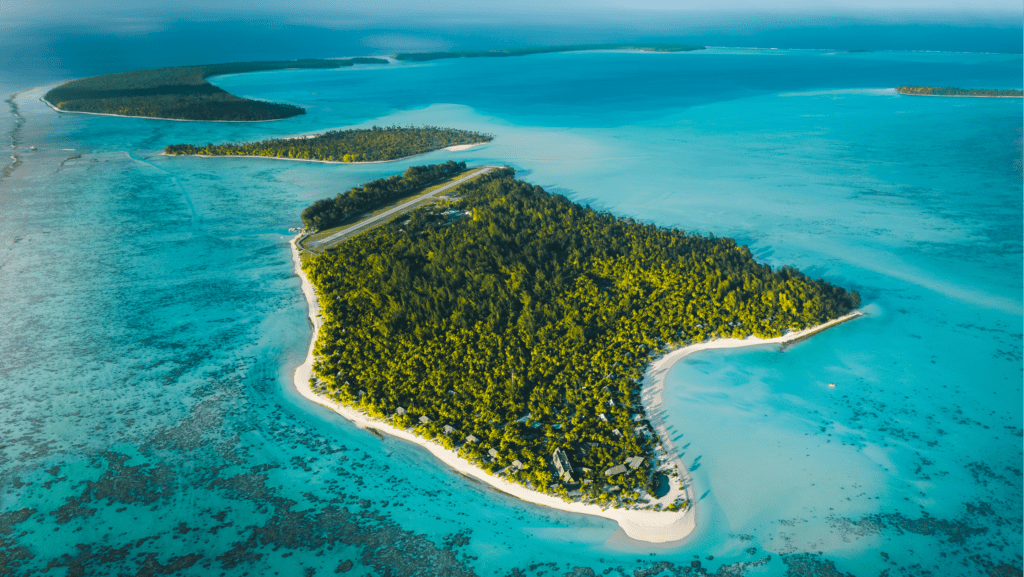
Tetiaroa: The Brando
At 4:00 PM, the light on Tetiaroa turns a bruised, electric violet that makes the lagoon look like liquid glass. You arrive by a twenty-minute flight from Tahiti, landing on a private strip that feels less like an airport and more like a secret. The Brando isn't about the usual resort theater; it is about the silence of a dozen motus and the way the sand feels underfoot—coarse, real, and ancient. I spent my afternoon kayaking through the shallows, watching the coral heads rise like submerged cathedrals. You don't come here for the amenities, though the villas are tucked away with a privacy that feels absolute. You come because the Tetiaroa Society is actually doing the work of conservation, and you can feel the weight of that stewardship in the air. It is a place that demands you slow your pulse to match the tide. It is rare to find a sanctuary that feels this intentional, where the footprint left behind is as light as the breeze off the reef.

Aman Venice
The Clara Edit
In the San Polo sestiere, Palazzo Papadopoli stands as a quiet, 16th-century anchor against the relentless churn of the Grand Canal.
Arrive at Marco Polo Airport (VCE) and take a private water taxi directly to the hotel’s private jetty. This 30-minute journey is the most direct way to reach the palazzo. Aim for late spring or early autumn to avoid the peak summer heat and crowds.
Request a room with a view of the private garden rather than the canal; the silence of the greenery is a rare, heavy velvet in a city that never stops shouting.
Take your morning espresso in the garden when the light is still thin and blue, before the water taxis begin their day-long wake.
Spend an hour in the piano nobile, where the Tiepolo frescoes overhead make the modern furniture feel like a polite, necessary interruption.
Walk five minutes to the Rialto Market at dawn, before the tourists arrive, to watch the fishmongers haul crates of silver-scaled catch from the lagoon.
I would skip the formal dining room in favor of the garden terrace; the air off the water is the only thing you actually came to Venice to taste.
The way the late afternoon sun hits the gilded moldings in the library, turning the entire room into a suspended, golden breath.

Hotel Bel-Air, Los Angeles
The Clara Edit
A pink-stucco canyon sanctuary where the city noise simply ceases to exist.
The hotel is located in a residential canyon, roughly 30 to 45 minutes from LAX depending on the notorious local traffic. Arrange a private car service in advance, as the property is tucked away from major transit lines and requires a vehicle for any exploration.
Request a room with a private patio; sitting among the ferns at 7:00 AM with a coffee is the only way to understand why this place holds its ground.
The chopped salad at the restaurant, eaten under the shade of the sycamores while the midday light filters through the leaves.
The walk across the wooden footbridge over Swan Lake, where the water is still enough to mirror the surrounding palms.
Drive ten minutes down into the bustle of Beverly Hills to remind yourself how frantic the rest of the world is before retreating back to the quiet.
The lobby bar during peak evening hours; it loses its hushed, private character when the crowd swells and the acoustics turn sharp.
The way the late afternoon sun hits the oval pool, turning the water into a sheet of liquid gold while the rest of the canyon slips into shadow.

Acropolis & Acropolis Museum Guided Tour
It is 8:00 AM, and the light is already sharp, bleaching the marble of the Parthenon until it glows against the pale blue Attic sky. Standing in the shadow of the Erechtheion, I am grateful for the guide. Without her, the site is just a collection of broken columns and heat. She points to the subtle curvature of the stylobate, explaining how the architects tricked the eye to make the structure appear straight. It is the kind of detail that turns stone into a story. We move to the museum, where the glass floors reveal the ancient city beneath our feet. Seeing the five Caryatids standing in their climate-controlled hall, their stone drapery frozen in mid-motion, is a quiet, heavy moment. The skip-the-line access is not a luxury; it is a necessity to avoid the midday crush. You are paying for the context, for the person who knows exactly where to stand to see the city breathe.

Post Ranch Inn, Big Sur
The Clara Edit
Twelve hundred feet above the Pacific, the architecture doesn't just sit on the cliff; it breathes with it.
Fly into Monterey Regional Airport and plan for a 45-minute drive south along Highway 1. Always check local road conditions before departing, as Big Sur access is frequently impacted by seasonal storms and slides.
Book one of the freestanding treehouses, where the floor-to-ceiling glass makes you feel like you are suspended in the canopy of the redwoods.
The Monterey abalone at Sierra Mar, served with summer beans and nasturtium, tastes exactly like the salt-heavy air outside the dining room windows.
The infinity jade pool at dusk, when the water temperature matches the cooling air and the horizon line between the pool and the ocean completely vanishes.
Drive ten minutes north to the Bixby Creek Bridge at golden hour to watch the light hit the concrete arches before the fog rolls in to swallow the coast.
I would skip the temptation to leave the property for 'sightseeing' in the village; the point of this place is the intentional, quiet isolation of the ridge.
The way the wood-burning fireplace crackles in the dark, competing with the rhythmic, muffled roar of the Pacific crashing against the rocks far below.

Café Sacher Wien
It is 4:00 PM on a Tuesday, and the light in Vienna is thin, filtering through the heavy velvet curtains of the Café Sacher. The queue outside is a predictable snaking line of tourists, but inside, the air is thick with the scent of dark cocoa and old money. I ordered the Original Sacher-Torte, of course. It arrives with a dollop of unsweetened Schlag that is essential; without it, the dense, apricot-jam-lined sponge would be far too dry. The chocolate glaze is firm, snapping under the fork with a satisfying resistance. Is it the best cake in the city? Probably not. There are smaller, quieter bakeries in the side streets where the crumb is lighter and the jam feels more like fruit and less like a historical obligation. But you aren't here for a culinary revelation. You are here to sit in a red-upholstered chair and watch the waiters in their stiff white jackets navigate the room like ghosts of the Habsburg era. It is a performance of history, served on a plate.

Six Senses Douro Valley
The Clara Edit
The 19th-century manor house sits heavy and quiet on the hill, watching the river carve its way through the terraced vines below.
Fly into Porto and arrange a private transfer for the 90-minute drive into the valley; the winding, narrow roads make self-driving a challenge for the uninitiated.
Request a room in the original manor house rather than the newer wings; the high ceilings and creaky floorboards hold the weight of the 1464 estate records better than any modern construction.
Find the Wine Library at 6:00 PM and ask for a glass of local tawny port, then take it out to the terrace while the light turns the valley floor a bruised, deep purple.
The indoor pool’s underwater sound therapy is strange and grounding, but the real magic is the Alchemy Bar, where you can mix your own scrub using herbs plucked from the estate gardens.
Drive twenty minutes to the small village of Lamego to climb the 686 steps of the Sanctuary of Our Lady of Remedies; the blue-and-white tile work is a sharp, cool contrast to the heat of the valley.
I would skip the organized group boat tours; they feel like a conveyor belt, and you lose the intimacy of the river that you can find by simply walking the vineyard paths alone.
The way the morning mist clings to the vines, turning the entire valley into a ghost of itself before the sun burns it all away.

Villa Cora, Florence
The Clara Edit
Perched on the Viale Machiavelli, this 19th-century estate offers a quiet, gilded reprieve from the frantic pace of the city center below.
The villa sits on the hills above the Boboli Gardens, about a 20-minute walk from the Ponte Vecchio. If you prefer not to navigate the steep climb back, the hotel provides a complimentary shuttle service to and from the city center.
Request a room on the floor dedicated to Empress Eugénie, where the rose-patterned motifs feel like a deliberate, soft exhale after a day spent navigating the Uffizi.
A glass of chilled white wine on the terrace at 6:00 PM, when the light hits the Boboli Gardens and the city noise finally begins to fray at the edges.
The Moorish Room, with its hypnotic, interlocking patterns that serve as a surreal, quiet reminder of the villa’s eclectic history.
Walk the short path to the nearby Rose Garden; it is less crowded than the main tourist arteries and offers a vantage point of the Duomo that feels entirely your own.
I would skip the hotel shuttle if you are feeling mobile; the walk down the Viale Machiavelli is a steep, beautiful descent that lets you earn your dinner in the city.
I would return simply to sit on the rooftop terrace at twilight, watching the city lights flicker to life over the Duomo while the scent of the villa’s centuries-old rose gardens drifts up from the park below.

The Clara Edit: Hotel Imperial Vienna
The Clara Edit
To stay at the Hotel Imperial is to accept that you are merely a guest in the former private palace of the Duke of Württemberg, where the walls are still draped in heavy silk and the air feels thick with the weight of 1873.
Vienna International Airport is a 25-minute drive from the city center, and the hotel sits directly on the Ringstraße, a five-minute walk from the Karlsplatz metro station. While the city is accessible year-round, aim for the shoulder seasons of April to June or September to October for the most comfortable walking weather.
Book the Maharaja Suite, where the six-meter ceilings make you feel small in the best possible way. The butler will unpack your bags while you stand by the window, watching the trams rattle along the Ringstraße.
Order the Imperial Torte in the lobby lounge; it is a dense, chocolate-hazelnut relic that tastes exactly like the city's obsession with its own history.
Walk the two minutes to the Musikverein at dusk, when the golden light hits the statues and the building looks like a temple dedicated entirely to the sound of violins.
Take a short tram ride to the Grinzing district for a glass of local white wine in a traditional tavern, a necessary exhale after the formality of the city center.
I would skip the hotel's modern fitness center; it feels like a clinical intrusion into a space that was built for velvet chairs and slow, deliberate conversation.
I would return simply for the ritual of slicing into a chilled Imperial Torte, its layers of marzipan and chocolate echoing the same historic sweetness that has greeted guests here since 1873.
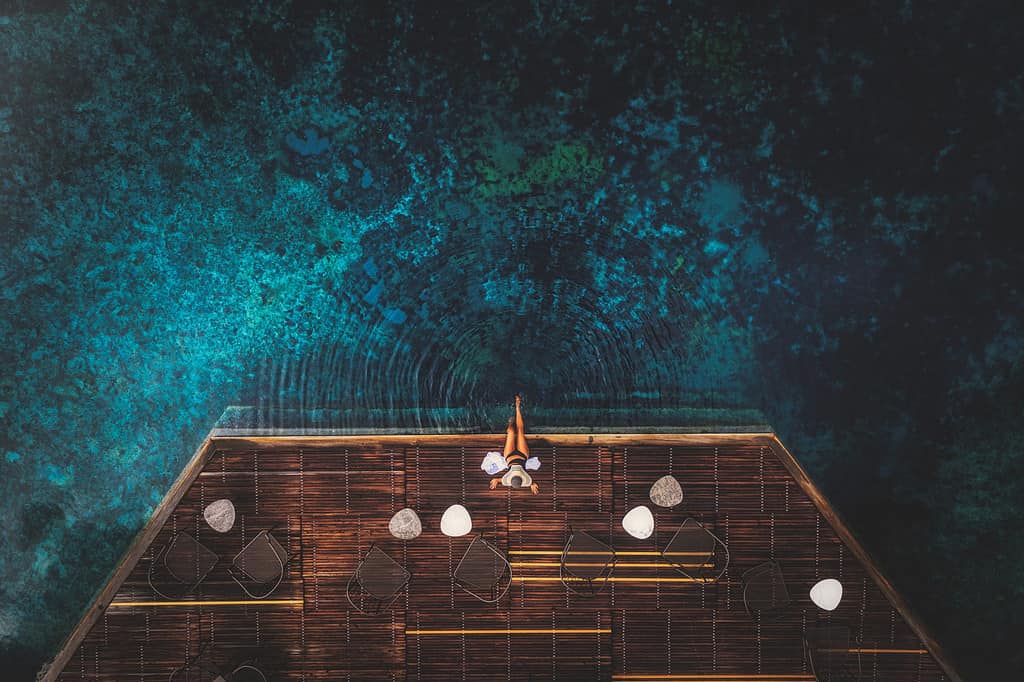
Terme di Saturnia
It is 7:00 AM, and the steam rising from the main pool at Terme di Saturnia is thick enough to swallow the Maremma landscape whole. The water is a constant 37°C, smelling faintly of sulphur—a sharp, honest scent that reminds you this isn't a chlorinated hotel tub, but a geological event that has been bubbling up for three millennia. I spent the morning drifting in the central spring, watching the light turn from a bruised purple to a pale, clear gold. The resort itself is polished, but the water is the real anchor. If you want the raw, limestone-carved drama of the Cascate del Mulino, go at dawn before the tour buses arrive. If you want to soak in silence while the rest of Tuscany wakes up, the resort pools are where you go to disappear. It is not about the amenities; it is about the weight of the water against your skin.

The Europe Hotel & Resort, Killarney
The Clara Edit
The water of Lough Léin is so still it acts as a mirror for the MacGillycuddy’s Reeks, and this hotel is the only place in the county that lets you watch the mountains darken from your own private balcony.
Fly into Kerry Airport and allow twenty minutes for the drive; if arriving from Dublin, the train to Killarney takes three and a half hours, followed by a quick ten-minute taxi to the lakeside.
Request a room on the upper floors facing the lake, where the glass doors slide open to let in the damp, peaty scent of the Kerry air.
At The Panorama, order the local lamb; it arrives with a depth of flavor that feels like it was pulled straight from the surrounding hillsides.
The outdoor vitality pool at 6:00 PM, when the steam rises into the cooling air and the sky turns a bruised, heavy purple over the water.
Take the short walk to the hotel’s private pier to watch the small boats bobbing against the reeds; it is the quietest, most honest corner of the property.
I’d skip the formal gym sessions; the real movement here is found in the long, winding paths through the grounds that lead you toward the national park.
The way the morning mist clings to the surface of the lake, erasing the horizon until the mountains look like they are floating in a dream.

The Párisi Udvar Hotel, Budapest
The Clara Edit
In a city of grand gestures, this former shopping arcade remains the most intoxicating room in Budapest.
Budapest Ferenc Liszt International Airport is a 30-to-45-minute drive away; the hotel offers a paid shuttle, though taxis are readily available for the 13-mile trip into the city center.
Book a room on the upper floors where the Art Nouveau geometry feels less like a hotel and more like living inside a kaleidoscope of stained glass and Moorish tile.
A glass of Hungarian sparkling wine at the Etoile Champagne Bar, ideally at 6:00 PM when the light hits the glass dome and turns the entire atrium into a honey-colored lantern.
Walk the length of the ground-floor passage slowly, tracing the intricate ceramic patterns and sculptural details that Henrik Schmahl obsessed over a century ago.
Cross the Elizabeth Bridge at dusk to see the city lights reflect off the Danube, a short walk that grounds the hotel’s internal opulence in the wider, darker pulse of the river.
I’d skip the hotel’s fitness center; it is perfectly functional, but you didn't come to Budapest to stare at a treadmill when the city’s streets are waiting.
The way the morning sun fractures through the stained-glass ceiling, casting long, shifting shadows of emerald and amber across the marble floor.

Aman Rosa Alpina, San Cassiano
It is 4:00 PM in San Cassiano. The light is hitting the jagged limestone of the Dolomites, turning the rock a bruised, dusty violet. I am sitting in Il Salotto, the lounge bar, watching the shadows stretch across the valley floor. Jean-Michel Gathy has stripped back the old-world clutter, leaving behind a quiet, cedar-scented minimalism that feels like a deep exhale. I spent the morning on the slopes, but the real draw here is the stillness. I skipped the formal dining room for a bowl of Shabu Shabu at Enju; the broth was clean, sharp, and exactly what I needed after the biting mountain air. The service is precise, almost telepathic, without the performative fuss you find elsewhere in the region. It is a rare thing to find a space that feels this grounded in its own geography while shedding the weight of its history. You come here to watch the mountains change color, not to be seen.
Lola: The AI Assistant That Actually Books
I have spent years watching travel tech promise the moon while delivering nothing but a glorified search bar. Most AI tools are just noise—press releases masquerading as innovation. But Lola, the new venture from the Kayak co-founders, feels different. It is real, it is bookable, and it is backed by the Booking Holdings engine, which gives it actual teeth. When I tested it, I wasn't just reading a list of generic suggestions; I was looking at live inventory and booking directly in the chat. The membership model—free, plus, and VIP—is a transparent way to fund a service that explicitly rejects the ad-cluttered mess of its predecessors. It is not a fad. By combining conversational planning with a human concierge layer, it solves the one thing that usually breaks travel tech: the gap between 'what should I do' and 'I have booked it.' It is a tool that respects the user's time, and for that, it earns a place in my kit.

Cipriani, Venice
The Clara Edit
The water taxi cuts the engine, and for a moment, the only sound is the slap of the lagoon against the wooden hull as you drift toward the Giudecca.
The hotel sits on the tip of Giudecca Island, a 30-minute water taxi ride from Marco Polo Airport or 20 minutes from Santa Lucia station. Once you arrive, the property provides a private motor launch that runs 24/7, whisking you across the lagoon to St. Mark’s Square in just five minutes.
Request a room in the Palazzo Vendramin annex, where the 18th-century bones of the building feel heavy with history and the private butler service makes the rest of the world vanish.
A Bellini at Bar Gabbiano, served exactly as it was intended—cold, peach-sweet, and pale pink—while you watch the light shift over the water toward St. Mark’s.
The Olympic-sized pool at 7:00 AM, when the filtered seawater is still and the garden air smells of damp earth and salt before the day’s heat settles in.
Walk the length of the Giudecca waterfront away from the hotel gates to see the local life of the island, where laundry hangs over narrow alleys and the tourists are nowhere to be found.
I’d skip the rush to the main island during the midday peak; the crowds in the center are a frantic contrast to the quiet, walled sanctuary you’ve already paid to inhabit.
The way the orange glow of the sunset catches the striped mooring posts, turning the entire lagoon into a shimmering, liquid copper mirror.
The Dispatch: 4:15 PM in Higashiyama
It is 4:15 PM, and the light in Kyoto has turned the color of weak tea. I am sitting on a low stone wall near the base of the Yasaka Pagoda, watching the shadows stretch across the weathered wood of the surrounding machiya. The tourists have begun to thin, leaving behind the rhythmic click of wooden sandals on cobblestone. I am not looking for a geisha or a temple gate; I am watching a shopkeeper methodically sweep the dust from his threshold, his movements as precise as a metronome. He doesn't look up. He doesn't need to. In this city, the silence is not empty; it is heavy with the weight of a thousand years of repetition. I came here expecting grand gestures, but I am finding my peace in the way the late afternoon sun catches the dust motes dancing in the doorway of a shop selling nothing but handmade incense.
I went up in a balloon at dawn
I am not a dawn person, and I am not a heights person, so the balloon flight was always going to be a test. They picked me up at 4:50 and I didn't speak for an hour. Then the basket left the ground and I stopped being afraid, because what was in front of me was so large that fear felt small. A hundred balloons, the valleys going gold, the rock churches tiny below. We drifted for forty minutes and landed in a field where they poured champagne. Would I do it again? Yes, but only once more, and only in October.
The city that spills into the street
Lisbon at the hour before dinner, in October, when the heat has left but the light hasn't. Everyone is out. Not at anything — just out. Families on the stoops, two men with a guitar, a woman hanging a rug over a balcony like it's a normal thing to do at 7pm. I stood on a corner in Alfama and realized nobody was looking at a phone. The whole city was looking at each other. That's the postcard they don't sell.
The table at the water's edge
I almost didn't go. The Cipriani name carries so much expectation that you arrive braced for a letdown. But the terrace at the back of dinner is the real thing — the lagoon going silver, the church across the water dimming, and a risotto al nero di seppia that tastes like the sea decided to be a meal. The Bellini at the bar beforehand is the one they invented. Stay for the boat ride back across the Giudecca at night; that crossing is the dessert.
The Archive